How Trump’s Executive Orders Reflect Partisan Disinformation

The most significant example of disinformation is partisan fabrication woven into assumptions of the policy making process. Misinformation damages public discourse, of course, but falsehoods at the root of policy can have far-reaching consequences for the U.S. legal system. We can see this hidden role of “fake news” in Executive Orders of Trump’s second term. 

Shortly after taking office, the new administration issued the Executive Order, “Restoring Freedom of Speech and Ending Federal Censorship.” The order flatly asserts Trump’s partisan attack:

“Over the last 4 years, the previous administration trampled free speech rights by censoring Americans’ speech on online platforms, often by exerting substantial coercive pressure on third parties, such as social media companies, to moderate, deplatform, or otherwise suppress speech that the Federal Government did not approve.”

It is no surprise that the administration uses Executive Orders as a partisan tool. Trump has successfully used state power to exact vengeance on political enemies. As he enlists the levers of state to do so, we can see how his self-serving version of reality thorns its way into policy.

Was the Biden administration violating American speech freedoms as the premise of the order would have us believe? The courts did not agree. Conservative justice Amy Coney Barrett found “[t]he plaintiffs fail, by and large, to link their past social-media restrictions and the defendants’ [Biden administration] communications with the platforms.” 

Twitter executives, dragged before the Republican-run House Oversight Committee, denied a similar charge that Democrats had coerced Twitter to remove information about President Biden’s son, Hunter. 

And yet, there it is, shaping policy priorities for the federal government.

In many ways, this is classic Trump governance. Executive Order as rhetorical attack. Perpetual campaigning; little meaningful governance. When policy grows from misperception or misinformation, it hobbles policy as a solution to American problems.

The bellicose language of the order illustrates something unique about the administration. Exaggeration and partisan attacks replace more precise legal language that is more common in policy documents meant to give direction and legal structure to American citizens and industries.  

Misinformation becomes a more urgent problem when falsehoods infect legislative and legal actions. They underscore a MAGA style of governance: reorient the levers of policy-making to serve partisan spectacle. The consequences are concerning. Policy efforts are misdirected. The public is falsely reassured. Government resources are wasted as federal workers try to take action on an issue the president imagined into existence. The irony is thick as Trump sues and cajoles private news media companies. America tilts at Trump’s windmills while real problems go unaddressed.

two kinds of American families

There are two kinds of American families. Mammalian families are close and lethal. Reptilian are distant and tranquil.

Mammalian reproduction involves complex, often long term relationships between parent and offspring. These relations are intimate and often involve skin-on-skin contact in the reproductive act, feeding offspring, and protecting the young to reach independence and reproduce themselves. 

In this way, mammals develop hierarchical family social structures. These small networks are made up of close blood relations and have bonding rituals to join family units. Close-knit social networks that can often lead to emotional connection through caring relations. 

These families show tight bonds but also have high rates of violence, predation, and homicide. 

I know one guy who was an alcoholic womanizer most of his life. Couldn’t hold down a job. Kept getting picked up by the cops. His dad would go down to the cop shop and bail him out every time. Blame the cops for arresting him. A father’s love became coddling of the worst kind. Kid gets kicked off the football team for smoking weed, and his dad blames the coach. LIke, in public, berating this poor midwestern PE teacher. He marched out on the high school football field wearing those wrap around sunglasses with the iridescent, reflective lenses shoving his pointer finger into the coach’s chest. And the son loved his father. His protector. They felt so strongly for one another. 

That father loved his son so much he harmed the offspring. That kid today is a 51 year old meth addict. Just had a baby. His fourth between three women. The latest child was with an arsonist. It went directly into foster care for addiction withdrawal. 

The closeness of Mammalian reproduction aids survival but can be perilous.

The reptilian family tells a different story. 

We see here the majestic march to the sea. These tortoise hatchlings emerge from their sandy nest and make their mad dash for safe waters. The mother and father are absent. The only parental love these newborns know is the care with which the mother chose the clutch location. Too far from the ocean and they are snatched by hungry sea birds circling impatiently above. Too close, the tide washes away their beginning. Many nests are discovered by predators and devoured as eggs. Many more die in their desperate lunge for the sea. The parent-offspring relationship is distant, and the presence of the parent ghostly. The young turtle could only infer parents were there at one time in the past because you are here on the beach running for your life in the present.

Turtle reproduction lacks the complex family structures of warm-blooded species and reptilicide is uncommon. Though there is relatively little violence among turtlekind, they never really know one another. 

I was late on paying a heating bill last February. They shut off the gas to my house, and it was very cold. When they called me to collect, I told them my job was seasonal. It would begin again in May. 

“Do you need your mommy to pay your bills, boy?” The man’s voice was unprofessional and condescending. 

“I have not talked to my mother in a decade.” 

I got off the phone and wrapped a blanket around my shoulders. Someday, a note will arrive telling me she is deceased. I wonder how I will feel. The same? 

The distance of the reptilian model deadens relationships while the family members yet live. It does not hurt. It does not elate. It does not feel.

Free Speech and FCC: Trump’s Controversial Policies

FeaturedFree Speech and FCC: Trump’s Controversial Policies

New administrations bring with them a new philosophy of governance. This is true of media governance as well. The pendulum swing from Democratic to Republican control of the presidency is, at times, a significant shift in media governance. Executive orders, proposed legislation, new commission leadership, and new telecommunications priorities all follow.

Here, we will watch some of these changes introduced by Trump’s second term. Tracking the shift in media governance is particularly important with this new administration.

Why? A couple of reasons. First, Trump has had great success challenging the mainstream press, particularly when outlets like CNN or the New York Times repeat elite, institutionalist criticism of Trump. He has made a meal of labeling criticism as “fake news.” The attack resonates with a skeptical American public that has historically low trust in TV news.

Second, these attacks resonate with an American public that has historically low trust in TV news. The Trump campaign’s rhetorical skewering of “mainstream media” resonates with his core voter base. Hundreds of thousands of his supporters feel aggrieved. They do not trust the American media system, and, when Trump supporters appear in outlets like CNN, they often experience condescension rather than representation. As a result, basic functions of the press like reflecting public will and fact-checking government have been crippled. A democratic media system cannot function without public legitimacy.

This dynamic between the politician and his supporters means we can anticipate some radical proposals in FCC actions, how content regulation evolves, and how private media companies cover politics.

Will broadcast licenses be challenged for how private news companies reported on the White House? How will coverage of immigration debates adapt to a new legal environment of threats from the FCC? Will the billionaire owners of social media companies fall further in line with Trump’s directives in response to the content moderation requests from the Biden administration? How will Trump’s FCC and Department of Justice use existing law to reshape the American news system?

We will attempt to chart some of these changes in order to better understand how media policy serves the presidency and what kind of social goals Trump 2.0 appears to pursue with policy and law. This record will be an ongoing and periodically updated.

Trump 2.0: Executive Orders and FCC Media Bias Investigations

Right out of the gate, Trump’s team has set out an agenda with the release of an Executive Order and a change in FCC leadership. Let’s examine recent FCC decisions before turning to the White House EO.

Brenden Carr, a first-term Trump appointee and telecommunications lawyer, has taken leadership of the FCC. Telecomm wonks like Carr are not known for partisan statements. In fact, telecomm policies are rarely framed as a right-left debate in public. No surprise then that Biden renominated Carr in 2023 despite Carr being a Trump appointee and harsh critic of Biden’s presidency.

Carr, however, seems to break from this non-partisan tradition. In a 2020 interview, Carr said, “[s]ince the 2016 election, the far left has hopped from hoax to hoax to hoax to explain how it lost to President Trump at the ballot box.”

Carr is not just shooting off rhetoric. Less than a week into his new role as head of the commission, he has started “bais investigations” into CBS, NBC, ABC. NPR and PBS are also under the gun for, ostensibly, accepting sponsorship support while also receiving federal funding. The underlying motive is more likely to starve media that remain shielded from executive coercion and quiet independent voices that might undermine government control of political narratives.

Carr’s legal moves do not seem in-line with Trump’s Executive Order of January 20, 2024. Section 2 of the Executive Order states:

Sec. 2.  Policy.  It is the policy of the United States to: (a)  secure the right of the American people to engage in constitutionally protected speech; (b)  ensure that no Federal Government officer, employee, or agent engages in or facilitates any conduct that would unconstitutionally abridge the free speech of any American citizen; (c)  ensure that no taxpayer resources are used to engage in or facilitate any conduct that would unconstitutionally abridge the free speech of any American citizen; . . .

The executive order is a case study in why policy pronouncements fail when they are muddied by partisan rhetoric. And let’s be clear that is what is happening. The order mirrors the aggressive campaign style but accomplishes little in terms of media law and policy due to self-contradiction.

As policy, the EO falls apart In the larger context of executive branch actions. Specifically, FCC Chairman Carr’s investigation of American news outlets appears to violate the spirit of Section 2. Section 3(a) states “[n]o Federal department, agency, entity, officer, employee, or agent may act or use any Federal resources in a manner contrary to section 2 of this order” (EO, Jan 20, 2025).

Carr’s FCC has done precisely what Trump’s Order appears to prohibit.

What policy documents do

Policy documents help industry leaders craft business plans. Partisan pronouncements, by contrast, are less helpful. They aim to undermine competitors for power rather than spell out the administration’s approach to media governance. Those watching the administration’s early moves to better anticipate regulatory conditions will have to wait.

Inconsistent policy is a sign of poor coordination among leadership at the White House Office. It is also a sign of incoherent principles guiding the new administration.

the basics: free speech law and tolerating political speech

Historically, media content regulations have been viewed as anti-American. Aside from the usual prohibitions against indecency (think: wardrobe malfunctions) and incitement, it has been mostly unthinkable to formally investigate news outlets for having political leanings. The behemoth partisan presence of Fox News in American politics under Democratic administrations is an obvious example. Fox’s “fair and balanced” news underscores the tolerance for criticism entailed by free expression law. The Biden, Obama, and Clinton administrations all begrudgingly accepted antagonism of Fox News personalities. These administrations embraced fair and unfair criticism as part of the job.

Why? Because prosecuting or regulating private media companies for perceived political bias is not just unthinkable. It is unconstitutional. The First Amendment prohibits Congress from “abridging the freedom of speech, or of the press.” These administrations understood diversity of opinion was more valuable to American government than silencing political speech. The president needed to answer critics.1

Free expression is a cornerstone or American media law and culture. The Trump administration has sent up some confusing signals about actual media policy that will define Trump’s second term. One early Executive Order claims to “end federal censorship” of the Biden administration . . . even as Trump’s FCC appears to be attempting to quiet the speech of major news outlets like CBS and NPR.

We will continue to watch media policies of Trump 2.0 as they take shape over the next four years. Free expression has a long tradition in the United States. However, free expression traditions are not guaranteed to remain unchanged in this political climate. Both the White House and a growing number of Americans are doubtful of American media and the legal environment that allows vigorous debate and criticism of government. Tracking policy changes will at least give us a glimpse into the new directions in store for the American public sphere. Stay tuned!

1 The First Amendment’s speech clause has expanded throughout the American system to include state legislatures, even including public universities which are disallowed from punishing students for social media posts since they are government institutions.

2 The presidency is no exception to First Amendment prohibitions, though it is worth noting the Supreme Court never ruled on John Adams’s Alien and Sedition Act, a censorship and deportation law of the early republic period that reflects the Trump administration’s agenda.

Cal’s Media History journals: a guide

An historiography assignment asks for comparisons of historical arguments on a given subject. Focus your search on academic/scholarly articles rather than journalism or other popular press sources. Make sure you are searching scholarly databases. That will make finding material to compare easier and the sources more authoritative.

Step 1. Look at history-focused articles in the academic press in Cal’s university library. Log in and narrow your search to academic journals and peer-reviewed on the left hand side of the library menu. You are looking for journals with writers who debate media history subjects. (FYI: you might need to use the library proxy VPN if off campus). You might also use Google Scholar to explore potential articles for comparison using these steps.

Step 2. Open the journal and search some aspect of media history you would like to explore. For example, you might be interested in the history of women and media. So, one would search within the journal for anything that mentions these subjects. Articles will always be historical in these journals, so I find this article:

Television—the Housewife’s Choice? The 1949 Mass Observation Television Directive, Reluctance and Revision by Helen Wood.

I would then quickly examine the argument as outlined by the abstract. Then, I would continue searching abstracts of other articles (or book chapters) with key words related to TV, Housewives in the post-WWII era. Once I find one that addresses the same subject, I would analyze how the pieces differ in approach, argument, types of sources used, and any assumptions the authors bring to the analysis of postwar women and TV.

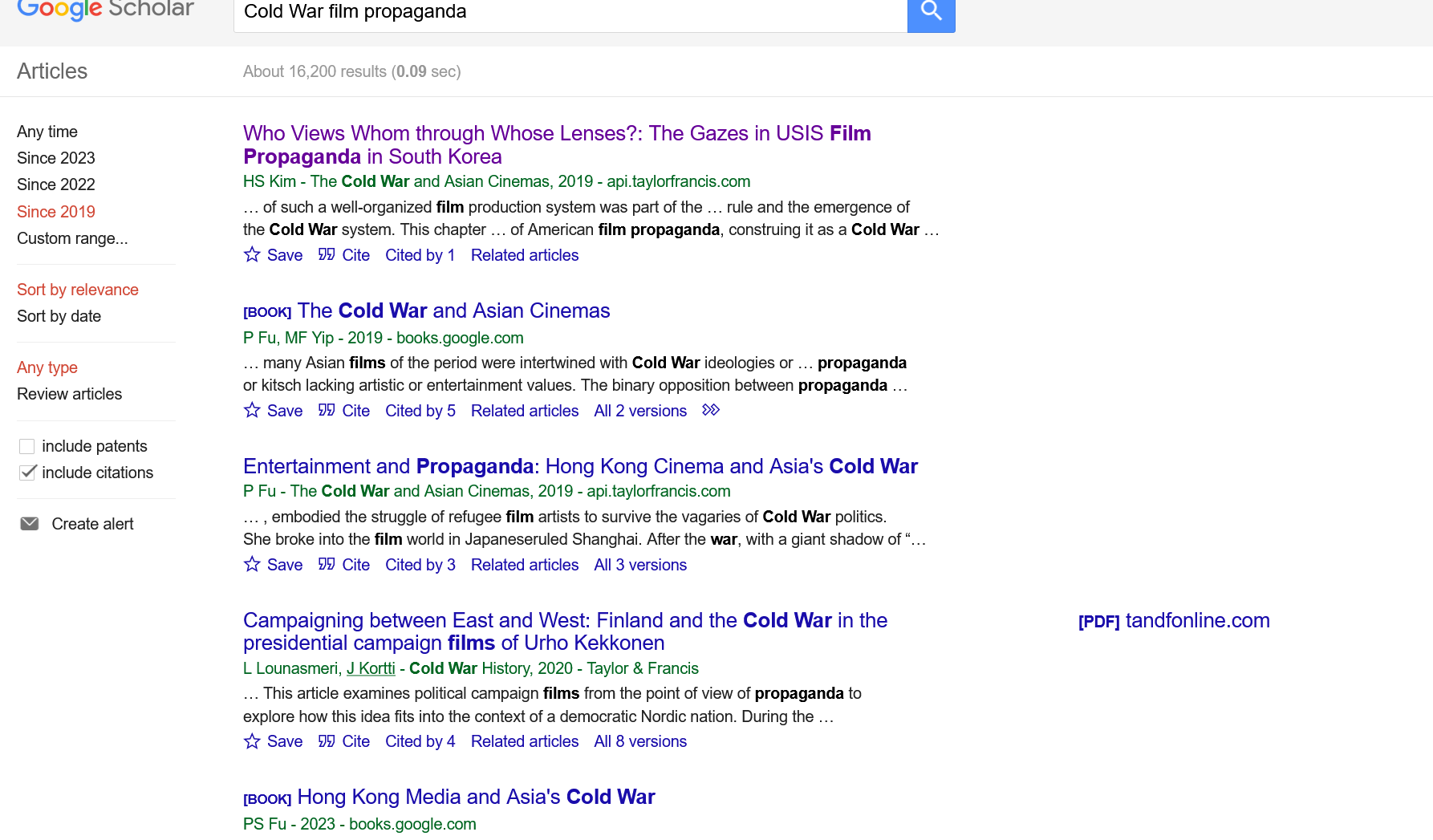
A Google Scholar search for keywords “Cold War Film Propaganda” shows a number of potentially comparable research articles. You would likely need to use your library database (or an on campus computer) to get access.

Step 3. Next, I would look at the abstract. That is the summary at the beginning. If I like it, I put it aside for later reference. Before reading the full article, I would examine the abstracts of other articles addressing the same subject and time period (authors writing about women and media in the 1940s or WWII film propaganda). Find two that seem to speak to one another in topic. The two authors may make similar or contrasting central arguments, but your task is to examine how they differ in argument, historiographical perspective, methods or archives used, etc. In the process, summarize the authors’ arguments, referencing the primary sources and methods where relevant.

That should be a good primer to point you in the right direction to do some basic historiography.

K Mart Security

“Lululemon stands by decision to fire employees who intervened in robbery”

“. . . Cellphone footage from the store shows two men wearing hoodies and face masks rush into the store and grab armloads of merchandise from areas closest to the entrance of the store and then rush out. One female employee is seen near the entrance of the store close to where the men are heard yelling ‘get out’ repeatedly.”

-CNN, 2023

*****

James pulled up in an 87′ Dodge Aries K Sedan. It was a blocky 4-door with some of the paint fading from the roof as if the highway speeds were stripping away the original bland blue. James said he was heading to Greenton, a nearby town about 10 miles away that had the “super” stores. These gigantic buildings, Walmarts, K-Marts, Staples were the first structures that appeared on the horizon as you entered Greenton coming from Ashmore.

The people of both of these small farming towns grumbled about the big stores over weak cups of coffee at dirty-spoon diners:

“Suzie’s Sporting Goods had to shut down when K-Mart set up the store in Greenton.”

“Yep.” another man agreed. “The entire downtown is a graveyard. They are shuttering half the stores in town. Gerry’s gonna lose his family’s TV store. I am glad his father isn’t around to see it.”

Aaron didn’t care much for Susie or Gerry, but he, too, felt these giant companies were the enemy of the good. Faceless and cold like the empty space in the excessively tall buildings. The exposed metal rafters and corrugated ceiling way up above the heads of the shoppers always struck him as industrial, like walking into a warehouse rather than a store.

Residents of Ashmore complained, but they all shopped at the Greenton megastores. Couldn’t afford not to.

Aaron was painting his father’s house when James pulled up in the aging Chrysler. James turned off the engine and yelled to Aaron through the rolled-down driver’s side window.

“How about Greenton today?”

James was tall and lanky with a bowl-cut of black hair and a rebellious attitude that bordered on a personality disorder. That is why Aaron liked him. Aaron appreciated a healthy disrespect for authority, especially the kind of ignorant authority teenage kids had to wade through in small Iowa towns. It was as thick and oppressive as the early August humidity.

James’s parents were gone for the week and left him with the car to get into town from their country house. Aaron’s parents were divorced, and his dad worked long hours. Aaron could rely on him being gone for about 18 hours a day.

“Yes and yes!” Aaron dropped the paintbrush unceremoniously, energized by the prospect of ditching chores for an adventure. “We need some shit for the fort out at MCA’s place. Something to cut the ground cover at the main campsite. Nettles are too thick for the shears. They have stuff like that there, right?”

“They got everything at the Super.”

“Fuck yeah, they do. They got donuts, man. An entire wall of donuts. I got one last time I was there. Grabbed it from that wall with the little plastic doors. I just ate it while I walked around the store. No one noticed, dude. Some old woman looked at me weird, but no employees were paying attention. By the time I was walking out the door, I had eaten one Boston Cream and two regular creams. Those fucks can’t keep track of us. This is gonna be sweet.”

“Good for us.”

Aaron jumped into the passenger seat, leaving his father’s garage wall half-painted and the can of brown paint open on the ground. He didn’t know when he would see his father next, so it didn’t seem to matter that summer afternoon. He searched a book of compact discs. “The Judge?”

“Sure.” James was a quiet kid. Quiet and angry. The kind of angry that wouldn’t lift a finger to put out a fire if it burned the high school gym or courthouse.

It was a 10-minute drive between Ashmore and Greenton, an uninspired stretch of flat state highway. The passing scenery alternated between rows of tall, late-summer corn and shorter soybean fields. Aaron talked about what they needed for the campsite, prattling on about the fort in the woods they would build. James listened while driving.

Suddenly, Aaron stopped his talk of woodland forts and turned up the car radio. A singer in a strained voice screamed,

“The evidence before the court is

incontrovertible

There is no need for the jury to retire . . .”

Aaron began singing at the top of his lungs with a smile on his face that looked more crazed than happy. The windows were down and wind beat into the car at sixty-five miles an hour.

“In all my years of judging

I have never heard before

Of someone more deserving

Of the full penalty of law.”

James’ head was tilted forward as if leaning into the forward movement of the Chrysler, quiet but intent. On the horizon, a towering K-Mart sign was coming into view.

*****

Something was wrong. Aaron was looking over some CDs in the Super K-Mart music aisle when he got a creepy sense in his spine. Maybe this trip was a mistake.

It was the third. Both James and Aaron had lifted merchandise from the store, exited to the parking lot where James had parked, unloaded the goods into the backseat, and re-entered the K-Mart two times already. The second time, James had slid two machetes up his sleeves and had to walk out the main entrance like some stiff-armed weirdo. No one seemed to notice. A third trip would be no different, they agreed.

But it was different. Aaron was looking down at the music as a ruse. His mind was actually crawling over his fellow shoppers, searching for strange behavior that might indicate security was aware of them. Aaron had half a dozen silk boxers tucked into his Umbro soccer shorts with two Led Zepplin discs threatening to fall to the tiled floor. James was nowhere to be seen. They separated to avoid attracting attention from the security cameras that hung like black orbs from the ceiling. It was time to go. Aaron hoped James was out at the car waiting.

The nearest exit was the garden section. The exit opened into a glass greenhouse that then opened into the parking lot. He glanced furtively behind him. He was about forty feet from the parking lot and freedom. No one seemed to be eyeing him, so he turned to look at some shelves filled with spades and gloves, standing next to a man who looked to be in his late 20s with dark brown, curly mullet and glasses that reminded him of David Koresh or Jeffery Dahmer.

“Hey, man,” Aaron asked in a mildly annoyed but dim-witted way, “do you know where the house paint is? Is it in Gardening?” The man glanced at Aaron and said no dismissively before moving on.

Aaron was relieved. The hostile indifference meant the man was not tailing him. He was just getting jittery. The rumor was that those cameras were just for show. If you felt like you were being watched, you would behave. No need to hire a bunch of hicks to stare at screens all day. Let the illusion keep the thieves in check.

He was only twenty-five feet from the garden center exit into the parking lot. Aaron wanted to see if James was around and did his best to appear like an annoyed customer looking for his family. James was still out of sight. “Maybe he is back at the car,” he said aloud to anyone listening, and turned to the exit. Then he heard it from directly behind him.

“HOLD IT RIGHT THERE! K-MART SECURITY.”

The exit was eight feet away and, as soon as the first word hit him from behind, Aaron dashed into the parking lot. He felt a hand swipe down his back as if the Superstore guard had reached for his t-shirt collar and missed. As soon as his legs shot him out of the store, the CDs fell to the pavement like rocket boosters falling away from a spaceship during liftoff.

He could hear the mullet-man curse and pick up speed behind him, but Aaron had hit his full stride weaving between parked cars baking in the Iowa summer sun. James’s car was on the other side of the building. Besides, if he ran to the car they would just take the license plate and cops would track them down later. He had to disappear into the wild. He glanced back to see two men. Mullet man and a heavy-set older man trying to keep up.

He glimpsed James, too, who was about half a football field away, unloading whatnot into his car. No one was pursuing him, so Aaron tried not to look at him too much and raise suspicions they were together, but James turned and began running too.

Aaron was easily outpacing the men chasing him , but he was also running without a destination. He slowed to a jog so James could catch up with him, and started to scan the horizon for a place to hide. James caught up and didn’t say a word. James wore flip-flops, slowing his pace.

Straight ahead, the parking lot ended in a ditch that dipped then rose to the highway, and sparse but high-speed cars whipped by. On the other side of the five-lane highway was Blas-Knox, a dying factory with a largely empty parking lot. If he could get behind the building, he could break the line of vision the two men had on them and change direction, even sprinting for the cornfields beyond the factory.

He looked back to see the two men gaining on him a bit. They yelled, “Stay there, you little sonofabitch!”

Aaron had heard this tone before. Every bully in high school. Every tough guy starts a fight because someone looked at their girlfriend too long. He could hear the violence. Adrenaline hit his bloodstream and he smiled just before running full speed. A semi-truck horn blared at him before speeding by. A grassy patch separated the lanes of traffic and dipped again into a road drainage ditch. Aaron’s legs faltered a bit as he sped down and up into the next phalanx of cars heading from Ashmore into Greenton. More horns and some people yelling out their windows at him, but he made it to the other side, sliding into the ditch that fronted the Blas-Knox building. Laying low, he peeked back to see the two men chasing him. Mullet man was pointing through the traffic in his general direction as the older man caught up to him and bent over in labored breathing. James laid low beside him.

“Well, what now?”

“Let’s lose them behind the Blas-Knox building then b-line it for the old country road. Hide in the corn.”

Aaron stood up and booked to the rear of the factory building. James and Aaron both discarded the contraband. Aaron threw the silk boxers under a parked car. One CD hadn’t fallen out, and he pulled it from his waistband and tossed it on the roof of the factory.

They continued to run toward the old country road, listening to curses and threats coming from behind them. Security had gained on them a bit, and James, a heavy smoker, was audibly wheezing and now struggling to keep up. His sandals were nearly slipping off his feet.

“I can’t keep going.”

“Why the fuck are you wearing those. Fuck fuck fuck!”

“Why are you getting caught, dick?”

“Ok. Let me think.” Aaron pointed to a range of uncut prairie grass. It was three feet tall and thick. The factory owners no longer tended the property. “Let’s take cover in the field. They won’t be able to see us, so stay down.”

Aaron felt supercharged and could have run the ten miles back to Ashmore, but he did not want to abandon James. The two separated a distance and crouched into the swaying, yellow grass. In minutes, the security detail made it behind the factory and began yelling threats into the field.

“We know you are out here, you little fuckers.”

The older man joined in. “We are going to get the dogs. They will take care of you!”

Aaron lay still as a field mouse. He wanted to shift his weight but feared calling attention to his position by making the grasses shift.

“You are in for an ass- an ass-whooping. Ass whoopin.” The older man was still catching his breath.

There were three now. One looked like a customer who just wanted to join the search to get his knuckles into some lawless punks. He seemed to be friends with Mullet man.

“I’ll just pull the Ford around. We can go mudding back here and find the bodies afterward.” His tone was almost jovial.

“Aha! C’mere you little shit. Now you done it!”

Aaron raised his head slightly to see one of the men jerk James up from the grass and wrestle his arms behind him as if planning to cuff him. Aaron sunk back down as another man approached his position – the older man. Aaron closed his eyes and prayed for invisibility. He imagined himself so motionless that he became the prairie grass. When he opened them, the old man, four steps away was looking directly into his eyes. Then he wasn’t. The man’s gaze just drifted over him as he continued the search, pushing the weeds aside.

The two others had James and called to the old man who rejoined them. Mullet man yelled out to Aaron. We will find you. Be back with the truck and the cops. You don’t know what an ass-whooping is, boy!”

Aaron waited 10 minutes for them to clear out and then ran full speed past the old country road and into the six-foot-tall corn. He found a wide row between the corn stalks and slowed his run to a long-distance pace.

Thick corn leaves interlaced at head-level before him, cutting his face as he jogged. He held his forearms up to push aside the foliage as he pushed forward. Small red lines appeared on his arms. They itched like made. He fantasized briefly about having those machetes then glanced out between two corn stalks to see a county deputy car drive by, suspiciously slow.  Retreating back into the rows of corn, he could smell the corn and pesticides, and his eyes began to swell. His nose drained snot like a faucet. There was no way he could run back to Ashmore.

Media Studies Journals for Prof Davis Courses

The following journals will contain peer-reviewed articles appropriate for Media Studies papers.

Cal log-in required for access. I advise using the “library tunnel” Global Connect VPN as well.

Critical studies in media communication : CSMC

Media, culture & society (Online)

Journal of media economics (Online)

Media law & policy (Online)

Television & new media.

New media & society.

Media industries (Austin, Tex.)

Journal of broadcasting & electronic media.

Journal of mass media ethics : MME.

Media history.

Media psychology.

Journal of media ethics (Online)

The journal of media law.

Global media journal.

Journal of broadcasting & electronic media (Online)

Global media journal (Canadian edition). English.

Social media + society.

New media & society (Online)

Journal of communication (Online)

Journalism & communication monographs.

Mass communication & society.

Journalism & mass communication quarterly.

Mortal Matters and Change

My husband was being a jerk all weekend, so I left to get some things at the store. When I arrived, a gentle older man sat crisscross-applesauce with a strange smile. I thought of how mean Jerry, my husband, had been that morning, and I started to smile like a smile could put a bit more happiness in the world to make up for all the jerks. I realized the older man was returning the smile I had on my face, and I said, how do you do? He said hello, and I turned to buy some candles for my mother’s birthday.

I felt like a real meanie for ignoring him. You know, just looking away from his smile. So I turned back to him. “No,” I said, “how are you. What has brought you to this place in the cold?” Yeah! So this is what I recall him saying.

Humans have done it, my dear. Humans and the love of . . . well, just humans. The sidewalk did but the sidewalk is less at fault. It was humans and not the sidewalk, if we need to make distinctions. Humans, because of the highly entertaining curse of self-awareness, can be a bit judgy. Some would say humans are arrogant.

Surely we are arrogant individually, you see. A human dressed in fine silks and polyester approached me the other day when I was begging for alms.

She said, “You should use your body to be useful and earn your money.”

I said, “Why is the money in your pocket yours and not mine?”

She responded, “For I have earned it though the sweat of my brow. You do nothing and expect reward.”

I showed her the sweat that had beaded on my forehead since our conversation had begun. “Verily, I have labored with you in this moment here in front of this well stocked Target superstore. Behold how I shiver with fear of your fine boots as I imagine them lodged in my ribs or deftly overturning my small collection plate with a swift kick.”

The woman in silk and polyester made a sour expression and turned away. As she walked away and through the automated, sliding doors, her piano scarf fluttered in the rush of heated air escaping from within. The warmth brushed against my cheek, and I was reminded of the cold in my bones as I sat cross-legged – just as I do before you now, young lady. It was clear to me that she was unmoved by my thinking. The woman felt my use of matter was of lesser quality than her use of the matter she had under her control. Was she arrogant? Perhaps. But I am not referring to individual arrogance. This is but a trickling stream by comparison to the bulging deluge of human hubris in judging collections of matter generally. In our hierarchy of beings.

How can we box existence into hierarchies? So arbitrary! So arrogant! Yet, there is a functional hierarchy of being that informs how much respect humans accord phenomena in the world.

Rocks can be stepped on and ground up without remorse.

Trees can be shredded and pulped without a lot of remorse.

Fish, chicken and cattle can be harvested and slaughtered without full remorse.

Monkeys and other non-food animals can be killed but, unless self-preservation is the purpose, dead monkeys deserve some remorse according to human standards.

Some wonderful idiots say eyes are the gateway to the soul. What they likely mean is that we can recognize an independent existence worthy of respect and privilege within the constellation of matter that has irised eyeballs. The evidence?! Ha! Animals with eye movements more like our own tend to be treated better. Humans more easily see them as peers in existence – if not equals. We can see how this standard of evaluating animal worth via the eyes manifests culturally in films and other fantasies that explain how “all dogs go to heaven.” Dead or cold eyes in robots indicate the failure of machines to reproduce humans faithfully. But eyes are only part of the picture. Eyes are the layman’s shortcut to the hierarchy of being!

Sir? Spare a dollar? No?

Anyway, this is the height of arrogance, some would argue. Pigs have said so. An octopus once did too, but he was a rare ocean-bound critic. Cephalopods have little experience with us for humanity’s foibles to be widely understood among them, but that octopus had some clever barbs! I wish I had written them down – but words are only one use of ink I’m sure that wily, many-armed bastard would remind me before jetting off into the murk.

He was right to leave me. I had no business in the worlds of deep water. Still, I wanted to defend us humans. We are just anxious about dying. We are “on edge” as they say. What edge? The edge of existence. A precipice of known and unknown. The sudden sense that we aren’t even on the edge anymore but falling. Falling but with no memory of what slippery cad threw us into this mysterious pit, the bottom of which we cannot see. “You’d be anxious too!” I wanted to yell at the retreating octopus.

My point is this: anxiety has a strange consequence for how we go about labeling the world and distinguishing the configurations of matter around us. That is why the trees call us “the Matter Prone to Worried Pondering.” Evergreens do, at least. Majestic palms call us “Something’s the Matter Matter.” Tropicals think they are funny. They are. I laugh every time I realize there is a banana in my mouth. One can’t have slaughter without a laugh!

Do you have a banana? No? Nevermind. We are talking about nervousness of knowing that there is an end of one’s consciousness. Right? Yes.

Our sense that something’s the matter drives us to strange, sometimes compulsive, behavior. Our obsession with hierarchy is an example.

Morally, we accord the tree more rights and privileges than the stone because it is living -as we define it. We despair at a child smashing a tree more so than that child smashing a stone. The tree has something to lose we can easily recognize: life. But what is life but matter organized into super-reactive form?

Spare a dollar? What? When you come out you will have one? Ok.

He won’t come out with the change he promised, but that is alright. That is alright.

Where was I? Where were you? Trees? Yes. Generally, we accord more privilege to the bird then we do the tree. Why? Trees are less discernibly reactive to the environment than the bird. Birds cease to move when chopped in half. The tree never moved at all, and its signs of life slowly disappear to human eyes. It reacts more slowly to the environment. Is this reason to prefer the tree’s matter be reconfigured than that of the birds?

I propose the thought experiment. Would we accord reactive plants a higher place in our ontologies if they were more often reactive? Sensitive plants or Venus Fly Traps? An easily offended fern?

But the world around us is just states of matter. Some more like us. Some less. Some are very mobile in how they use matter. Some sit in stony silence. Some as noisy as us. When you hit some with your favorite stick, they just take it and don’t respond. When you hit others, they run away or get grumpy.

And we would categorize them. “This one, a tree, just takes the axe blow until it falls down. This one is harder than the axe head and stands firm against the blade. This one coming out of Target sees the axe and runs the other way making baleful noises.” Good information for creating categories of matter in order to feel safer in a world that will ultimately kill you by re-configuring your state of matter.

The best part is that the world we fear so often, its sharp edges, the mugger, the violent spouse, it is just a continuation of us. It is almost as if it calls us to rejoin the so-called inert state of being. “Your reactivity is exhausting. Come back to us and be still.” But the ear is just a metaphor to matter. A device to hear itself. The revelation of spirit unto spirit? Hardly. Revelation of matter unto matter.

Of course, all this anxious pondering took place well before philosophers came up with words like ontology, Dasein, and other fancy phrases for ranking forms of matter. Across many independent cultures, these hierarchies all had a curious similarity: humans were at the top. Cuttlefish be damned!

Spare some change?

I admit it is a little cringy. Humans putting themselves at the top all the time? We can rationalize why. It was only natural that humans found themselves at the top of these efforts to catalog all of matter. By the time humans were creating and exchanging the relevant charts and graphs, we had appeared to conquer the big toothy cats and cephalopods alike.

More or less. We still get chewed up by bears occasionally, but we tend to blame ourselves if we meet misfortune at the hands of the “lesser” beings. A violent bear is unworthy of a declaration of war, for instance. We don’t hold one bear’s eviscerating overreaction to humans camping nearby as a premise to kill other bears that bear hung out with. We reserve that guilty-by-association reasoning for other humans. We stop their reactivity so our own reactivity will triumph! So OUR organization of matter, like deck chairs on the Titanic, will prevail.

So much matter! So many different types of matter! We must categorize. That is a tree. Very nice! Look beneath the tree. That shadow of muscle with its piercing eyes and, wait a moment. Yes, those are flesh-tearing teeth. That is a cat that will eat me. We can imagine them peering into the dark of night and declaring, “Let us distinguish these two forms of matter. Clearly doing so will be helpful.”

Thus primordial categorization surely sprang from the need to eat and not be eaten followed by questions about why we cannot stop matter from changing beneath our feet.

The earliest eyes in evolutionary terms were merely light sensing parts of sea life. It was useful to know where the sun was because that is where there was more plankton or algae or smaller sea life to eat. Darkness meant death. Light meant continued life.

So, as matter that is ever-revising itself into new compositions, we live. To continue living for whatever reason -to have children, to love each other, to eat good food, to watch every installment of the Transformers franchise-  we categorized the matter surrounding us to survive. To go on. To survive. To know Michael Bay’s cinematic moods more intimately . . .

We saw the variety of things in the world and became attentive to other forms of matter. We began the enterprise, like Adam in the garden, of cataloging all the stuff to forms of matter that were also in the business of living.

The more imaginative and self-deprecating cultures created an invisible topmost layer of gods, angels and demons who had helped us with our anxieties as we first began to grapple with loved ones having an expiration date. Gods at the top. Then some angels or other super-powered yet humanoid group with too many eyes or bird wings or vendettas against strong snakes. These below-god-above-humans types are often in obedience to the top of the Being Pyramids we construct in our anxious pondering of the world around us.

“Here is my mother. She is here at my feet by the fire but no longer there. Asleep forever. But I loved her interactivity! Where did they go? Can I meet them again? How can a person, so helpful and comforting -if occasionally a bit bossy- become just plain matter?”

Maybe the functional ontology of humanity is based on, first, the degrees of interactivity with the environment. And, second, the degree of interactivity with humans. Yes, all human moral judgment is based on either the appearance of life (like our own) and then the similarity of that appearance to our own experience of life. Both are based on the “degrees of interaction.”

The first degree of interaction is at the level of matter. All living things are, of course, collections of matter. Why matter seems to have worked itself up so much that it produced life is the biggest mystery and it need not detain us here.

We tend to value more highly and, hence, accord more rights to forms of matter that react to the environment. On this scale, “inanimate” and “animate” are the broadest binary categories. But we can see more fine-grained hierarchical differentiation in human assessment of the phenomenological world.

Stones and hammers, some say, have only being-in-themselves. These things do not interact with the world. Some would point out that they make no choices in the course of being. Slime molds and lichen react to the world, growing in favorable conditions and bending toward light as a food source, but these hardly constitute “choices” in the human sense. Wolves and birds do make choices as they weigh courses of action. The wolf may want to invade the chicken coop, but she also knows the farmer will kill her. Wolves and birds choose according to self-preservation. Elephants and dolphins perhaps occupy an additional strata of choice-making when interacting with the environment. More complex social capacities in these species have greater choice in how they interact. Dolphins at play. Octopuses that reach out to human divers with curiosity. These beings make increasingly complex choices that go beyond life and death decisions. They thus enter a different ethical category.

So, we can create an ontology according to the degree and quality of choices each species appears capable of making. You and I here today can do this! We can also see these choices as a mere byproduct of increased interactivity with the environment. I propose, umph . . .

Suddenly, the man flinched. He quickened his speaking pace, the words spilling out at an incredible speed, but he was unable to finish. I looked up to the storefront having forgotten where I was. A blond woman in nice boots marched out of the Target with a teenaged store employee sheepishly following her. When I turned back, the man was gone, vanished like a ghost.

The store employee nodded, and I looked that way across the parking lot and saw him. The man was running with his small plate, some coins bouncing on the pavement in his wake. He clutched at his loose-waisted pants, a bit of his butt was showing.

“Was he bothering you, too?” the woman asked, her shopping bag clutched close to her side.

“Yes,” I said.

Basic Research Summary

Basic Research Summary

Teachers use research summaries to get students acquainted with the current arguments on a topic in an academic field. So, they inform us about a topic, but they also teach students to see the methods researchers use to make arguments. It can be a lesson on evaluating evidence.

There are two kinds of summaries. One is a “deep” and one “lite.”

Deep summaries not only outline the research in a study but also contextualize the research. For example, the summary of an article on consumption in America after World War II would also include references to other historians who have studied the period for comparison. Book reviews are a kind of deep summary.

Lite summaries focus on the information and arguments in the study. These are “lite” because they are shorter and do not contextualize the research. They are useful as quick reference when assembling a literature review or annotated bibliography.

For either type of summary, there is a common procedure in assessing the research you summarize.

First, scan the research. What is the main hypothesis or argument? What evidence did the researcher use? What are the key findings? (5 min)

Next, read the piece well and take notes on important features that may be important for a summary. (20-60 mins)

Once you are familiar with the argument, methods and conclusions, write the summary. Use the following overview to guide your writing process.

Light Research Summary Elements

  • APA style citation info as title
  • Introduction – offer a brief overview of the topic and its importance; include a concise description of the research questions or hypotheses pursued by the study’s authors. Finish intro by outlining the main argument/findings.
  • Methodology –  detail experimental methods and/or the type of primary evidence used to make the argument (e.g. types of experiments, surveys, historical sources, sampling, statistical analysis, etc.).
  • Results section – describe how the data/evidence led the researchers to their conclusions.
  • Conclusion/Discussion – interpret the results, theoretical models, the study strengths and limitations. What are the implications of the arguments made? How do the findings , conclusions, etc. Arguments and findings are revisited and validated or denied, based on how convincing the evidence is.

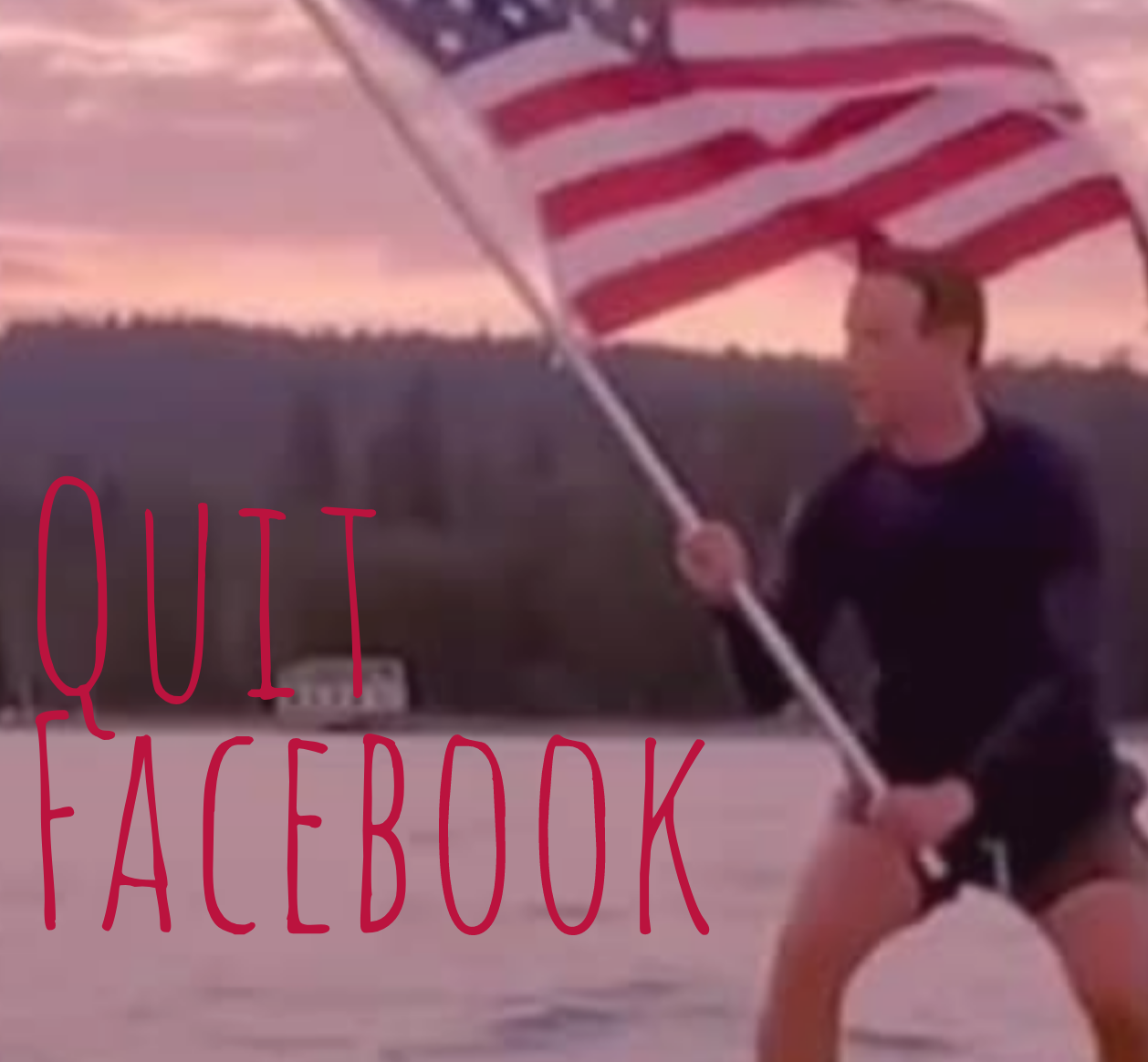
A Quit Facebook Movement? Some Academic Research

Facebook’s advertising practices have led some to question the social and political ramifications of social media. Is an automated advertising system promoting partisanship? Do algorithms point users to more politically extreme or polarizing content?

Here is a selection of public discourse related to these questions and FB’s social impact. Take a look.

Facebook in the news (video)

Facebook in the news (print)

Facebook and monopoly

Facebook and misinformation

Facebook and addictive behavior

Facebook and self-esteem

Facebook Critic Organizations