Who’s afraid of non-western propaganda channels?

Preface to Who’s Afraid?

King PutinWestern responses to RT, Russia’s English-language news channel, have rekindled debates surrounding media globalization. Some relate to perspective diversity in a democratic media system. Should Western media regulators limit the ability of foreign news to reach audiences in Britain or the United States? Some relate to the contrasting definitions of what news is in a global media environment. If RT (formerly Russia Today) frames world events according to the Kremlin’s political or economic agenda, is it news or propaganda?

RT is state-sponsored and, by Western standards, departs from traditional assertions that news production should be independent of government. However, placing limits on viewpoint diversity violates basic principles: democratic publics deserve a media environment in which all views appear. The people will sort truth from falsehood. If government regulators were to limit RT, would it not be dictating what the public can or cannot see? Would that not commit the same sin that underpins criticism of RT as propaganda?

My colleagues and I sort through these questions in the following discussion of international news. We assert that even the modern hybrid of propaganda and news can make for a healthy public debate.

Who’s afraid of non-western propaganda channels?

The revelations early this year regarding editors at the British Telegraph newspaper pandering to the interests of megabank HSBC once again demonstrate the commercial limits to freedom of the press in the west. The good news is that the rise of non-western news channels has the potential to alleviate the western media’s weakness.

Western journalists, media critics and officials frequently lambast non-western, state-sponsored news channels like the Russian RT for distorting the truth in the interests of their financial backers. Fair enough. Yet such channels also serve a valuable, often-overlooked function. They provide reporting and perspectives on the west that its commercial media do not.

American Secretary of State John Kerry has denounced RT as a “propaganda bullhorn” that “has been deployed to promote President Putin’s fantasy about what is playing out on the ground in Ukraine.” There is indeed strong evidence that RT’s editorial line bends toward the Kremlin. RT anchor Liz Wahl resigned in protest against her channel’s pro-Russian coverage of the unrest in the former soviet republic. Another RT anchor, Abby Martin, also protested on air but did not quit her job.

Propaganda: deception or perspective?

But occasionally RT reports truths that are absent in mainstream western journalism. For example, western outlets have consistently heralded the Maidan Square protesters, who ousted Ukrainian President Victor Yanukovych in 2014, as opponents of corruption and supporters of freedom. By contrast, RT has emphasized the role that pro-fascist groups have played in the Ukrainian revolution and how they have been tolerated, if not supported, by western governments. RT’s coverage was also more likely to highlight the grievances of  Ukrainians in the east.

Neither the western nor non-western journalistic story is complete, but RT’s existence provides western news consumers with a fuller picture of the events in Ukraine.

In short, the appeal of non-western propaganda channels is that they ameliorate structural weaknesses of the western media, like an over-reliance on official western sources. The failed western coverage of the war in Iraq provides only one, though jarring, example.

Western officials of course view the challenges to their hegemony over global news as a threat to their ability to mold public opinion. In the aftermath of 9/11, then US Defense Secretary, Donald Rumsfeld, derided Al Jazeera, the Arabic satellite broadcaster funded by Qatar, for its “pattern of playing Taliban propaganda over and over and over again.” Senator Richard Lugar denounced the Latin-American Telesur as aiming “to spread [Venezuelan] President Chávez’s authoritarian propaganda.”

Such fears have grown especially acute after foreign news networks set up English-language channels, thereby directly challenging elite control of western public opinion. RT is perhaps the most prominent example, but the list includes Al Jazeera English, TeleSur English, Iran’s PressTV, and China’s CCTV America.

These outlets have not just been derided. Some have met concerted resistance from pressure groups who oppose their entry into western markets. For example, Honest Reporting Canada has filed complaints with Canada’s media regulator, expressing the fear that Al Jazeera would undermine political support for Israel.

Limits on foreign news

In the US, the greatest barrier to entry has been the disinterest of major commercial distributors. Al Jazeera America had such a hard time entering the US market that the network ultimately decided to buy Al Gore’s Current TV, solely for its distribution agreements with companies like Time Warner Cable.

Western audiences are warming to the different perspectives now available. While major US cable news networks have hemorrhaged viewers, foreign channels have grown their audiences and gained entry to more US markets. They also attract significant attention online.

RT’s online popularity has outstripped many Western media operations. It boasts over 2 billion total YouTube views and 1,496,784 subscribers, dwarfing The New York Times’ 489,476. In 2012, RT captured 8.5 percent of the top five Youtube news videos, compared to Fox at 3.5 and the BBC at 3.1. The Ukraine conflict raised the number of viewers even higher.

Americans are watching. Thirty percent of Youtube viewers and 50 percent of RT’s website traffic came from the US in 2012. RT’s success goes beyond new media as well. In Washington DC, RT’s cable channel attracts 13 times more viewers than Deutsche Welle.

The appeal stems in part from a crisis of confidence in commercial news. Many western viewers have become disaffected with their own media. They realize that channels backed by non-western governments offer value by creating space for critical journalism and providing a platform for activist and dissident voices.

Rather than demonizing or blocking outlets like RT, Al Jazeera, and Telesur, we should engage their perspectives. If their facts are wrong, we should counter with better information. If their arguments are illogical, we should counter with higher sense. Of course, adopting more speech as a solution for wrong speech ultimately requires that we trust the public to be able to come to sound conclusions about important matters.

Foreign news channels are here to stay. We can respond with derision and suppression, or we can renew our democratic commitment to sound journalism and widespread media literacy. By choosing the latter, such channels might end up enriching our democracy — even if that is far from the intention of their owners.

Ian Kivelin Davis teaches communication studies at Augustana College-Illinois, Rich Potter at the American Jewish University, and Tabe Bergman at Renmin University.

A marketer’s perspective on China’s recent push to restrict socially harmful advertising . . . Bell’s summary is rather insightful.

“Much of the tightening up of the advertising laws was overdue and needed. But the feeling you’re left with is that this is not only an attempt to change advertising, it is also an attempt to change society.”

See the fuller analysis from WARC: China’s new strict ad laws | warc.com.

“A tale of two Chinas”: advertising to social inequality

China Shave Sexy

Advertising and China’s Growing Social Inequality

Chinese consumers are highly prized by both Chinese and international retail companies. As China has opened to foreign investors, the economy has grown consistently and at a prodigious pace. But growing economic inequality and the influence of advertising practices may contribute to social fragmentation in China. As global marketing firms like Proctor & Gamble and L’Oreal target China’s urban affluent, they help create two Chinas that map onto the growing class divide.

P&G executives make much of the economic and internet revolution in China, highlighting how Chinese consumers have more say in the brands they choose. “Instead of enjoying being taught and told what to do, they expect to be listened to, better understood and ultimately to be delighted,” one marketer recently said. But marketing-speak like this ignores the tendency to shape consumption habits rather than cater to them. These companies do more than capitalize on and reinforce class stratification (discussed below). Marketers teach how to consume.

Take Gillette’s “Shave Sexy” campaign. Corporate researchers found Chinese men prefer to shave dry, i.e. without P&G’s product slathered across their cheeks and chins. The solution? Create a market by tapping into male sexual anxieties. The company administered a “social experiment” in which women watched twin men shaving, one “dry” and one “wet.” Not surprisingly, the experiment yielded results favorable to product lines: women preferred the twin using shaving products. Gillette’s “sexy shaving tips video” taught a new generation of consumers that dry shaving meant a shriveled sex life. And with good results: The company had the best sales month in Gillette’s history. It seems Chinese consumers continue to be taught, though now by foreign companies in tandem with China’s media monitors.

The social “experiment” is worth a watch:

Chinese consumption: the broader strategy

Brand marketing memes like this complicate common assertions about consumer sovereignty in the digital age. Marketers may listen to consumers but only with the aim of shaping consumer desires to match the needs of manufacturers. These tactics are part of a broader strategy of instruction in the courtship of China’s increasing wealth.

The “long economic boom” for China’s highly managed economy has recently slowed, Chinese officials predicting GDP growth in the 7.2% to 7.5% range rather than closer to 10% typical of years past. But the slowed pace is still growth, and an emerging consumer class is ideal for brands looking to get in on the bottom floor.

Data from the National Bureau of Statistics of China shows the tremendous upward swing in consumer spending (see chart). Between 1998 and 2014, spending increased from below 50,000 CNY to 241,541 CNY. Though investment drove China’s fantastic GDP growth previously, declining foreign direct investment and weakening real estate numbers have encouraged a change in focus for national leaders. This shift has prompted Chinese policymakers to rely on consumer spending to power continued economic expansion. With affluence comes disposable wealth. Disposable wealth draws international goods producers like Proctor & Gamble, one of the early heavy investors in Chinese consumer markets.

Chinese consumer spending growth 1998 to 2014

Increased affluence among the Chinese is not, however, equally distributed. China’s economic fortunes have benefited an urban elite. In fact, a recent report illustrates just how uneven China’s development is. Using the Gini coefficient, researchers found China’s market reforms in 1978 were a trigger for the concentration of economic power in urban centers. The coefficient measures wealth disparities using “0” to indicate equal distribution. A score of “1” means a single individual possesses all the wealth. China’s score in 1980 hovered around 0.3. By 2012, the score reached 0.55, surpassing the 0.45 score for the United States. The so-called “rat tribes” living in underground bunkers that lay beneath urban centers is a glaring testament to the coexistence of poverty and affluence in China.

As the uneven Chinese consumer economy becomes a cornerstone of the global economy, the advertising industry has given China more attention. Following from government policies that have disproportionately directed resources to China’s industrial hubs, marketing analysis slices and dices China’s demographics in search of consumers. In the process, marketers have adopted a language of tiers. Top tier markets (often cities) are those with greater total disposable income, clear targets for multinational goods manufacturers. The marketing analysis firm, Boston Consulting Group, for example, has released a report that proposes viewing Chinese consumers as a “two-speed” consumer base. The report details how the average affluent household can expect 11 percent growth in income in the near term while “aspirant” households will only see 6 percent. This translates into a 20-fold difference in earnings. “Low-speed” households, expecting only a 3 percent uptick in earnings, with more than half of this bottom tier likely to see no growth at all. In sum, the “high-speed” households could provide near 90 percent of new consumption.

In light of this growing income gap, market researchers suggests a troubling strategy for companies in search of Chinese consumers:

“This two-speed consumption economy has vast implications for consumer-facing companies. A mass approach to such a huge market will not work. More than ever, companies must place their bets on the most promising income segments, product categories, and digital channels.”

The language in these reports reflects how class segmentation is, in part, entrenched by global marketing techniques. First, analysis identifies preferred consumers, ranking cities and regions as higher and lower tiers according to the disposable income that sales-driven firms can likely extract from Chinese consumers. Second, new media tools and allow marketing campaigns sophisticated consumer targeting. The strategy is simple. Find media that have the audiences with disposable income, focus advertising dollars in these areas and dissuade them from saving. “Consumer companies have an unparalleled opportunity to convince these consumers, particularly the upper middle class and above, to spend more and save less,” the BCG recommends. “By focusing on the high-speed parts of the Chinese consumer economy, companies can avoid getting stuck in the slow lane.”

What kind of social effects will result from the narrowcast targeting of income segments in relation to their media use? What role will this play in the nominally socialist politics of the country? This strategy to accommodate (if not monopolize on) growing inequality may have significant social effects, especially in light of the prospect that the wealth gap will grow for the next several years.

In the meantime, Chinese state governed media landscape will reap the benefits. State-run China Central Television has profited, bringing together government power and advertising revenues that state media of yore could not imagine. A live auction for advertising time slots for 2014 brought in 17.5 billion yuan, an increase of 10.8 percent on the previous year despite national economic slow down. The result is government-directed media with companies like P&G and L’Oreal footing the bill.

As foreign and Chinese advertisers flood China’s media, it stands to reason that class divides will deepen along the lines fostered by uneven geographic development and the cultural instruction pushed by China’s new vendors as companies create market demand. What remains to be seen is whether class fragmentation will have a tangible toll on social order: a Gini score above 0.40 predicts broad social unrest. For now, the promise of China’s “market socialism” is unclear for the social make-up of China and its increasingly wet consumers.

Small cable companies in a market for giants

Quote of the day:

“I think there are other transactions out there,” Maffei said in response to an analyst question about consolidation in the cable industry. “If you’re a nonaligned–meaning non-Comcast, non-Charter–cable company you are at somewhat of a competitive disadvantage in the video space if you do not have a big brother who is helping lower your cost of content.”

Popular perceptions of public media: “The Boat That Rocked”

There has been a battle between broadly opposed approaches to electronic mass communication. The first is the national public broadcasting paradigm. The second is the market-rating paradigm. Over the course of the century, the market approach (which I use interchangeably with the ‘commercial’ approach) came to dominate. United States’ media export power had much to do with the larger shift toward the adoption of variations on the commercial model. Still, the public broadcasting model endures, a sign that many continue to believe the market cannot provide all the stripes of media needed for democratic forms of governance. But this seems the exception to the rule. Especially in the United States, where the commercial model is the freedom-lovers alternative to state controlled authoritarianism. Popular conceptions shape how we discuss media politics in a fundamental way. So, when I see popular conceptions underlying mainstream television and films, I perk up.
 
This is why I want to talk about “The Boat That Rocked” (trailer), a film featuring Philip Seymour Hoffman and written/directed by Richard Curtis. It is media about media. Media history, more precisely. The central antagonism in the film crystallizes, if cartoonishly, popular criticisms of the public-service model. In the picture, Curtis positions regulators as culture oppressors trying to save Britain from moral decline.The decline is represented by youth music and a band of quirky anti-authoritarian DJs. The tension mounts as uptight British regulators chase the irrepressible band of radio rebels who blanket Britain’s shores with forbidden rock music when rock music meant cultural revolution: sex, drugs, etc. Before I talk about the film, a little background on the public and market models of media.

Early public broadcasting was class-coded and often carried exclusive assumptions about the public it was to serve. Public broadcasting, as a national policy, sought to uplift ‘the people’ and programming reflected “high culture” fare that the elites thought would elevate the lower classes. High culture was conservative by nature and embodies what Matthew Arnold called “sweetness and light.” Sweetness and light meant the best of civilization: arts and humanistic education that promoted positive cultural values through learned self-reflection. Advocates and cultural critics like Arnold sought to take all the best of the human thought and foist it on those who had no access to it . . . often the poor. The ‘dirty masses’ thus could transcend their circumstances given exposure to classical poetry and other approved forms of art often stemming from the ancient Greeks. The governors of Britain’s airwaves subscribed to this basic belief in higher and lower arts. They also believed media content significantly determined national character and individual behavior. They could be the purveyors of all that is sweetness and light. Could radio not instruct and inform so many? It could be an everyman’s library, plucked from the air. Books for the illiterate.

 
This distinction between high and low culture had taken shape in the age of print but informed perceptions of new media like radio broadcasting in the early 1920s. The high/low brow divide and the mission of uplift imposed a hierarchy. The clear condescension in this approach was not merely crafted to tighten political control. It sought to use the new medium as a means to improve the nation. Early radio advocates in the United States, for instance, saw the potential to put the university into the ether, democratizing access to higher education. But public broadcasting of this stripe was also naive and arrogant as one class imposed a view of what content should circulate and what was best for public consumption.
 
class, public media and pirates
Those in charge of content were naturally higher class with a liberal-arts education common to the wealthy and connected who would go on to populate the bureaucratic ranks that make media policy decisions. This group dictated material they thought would uplift when, in retrospect, the mission of educational and cultural amelioration of ‘the public’ was not only class-biased but also neglectful of multicultural realities, a multiculturalism that would increasingly change the nature of the public in these countries.

This is, in part, why public broadcasting has the enduring reputation for being stodgy and disconnected from the “real” public: classical music, public policy debates, and the arts were the kind of high-brow material that would allow a national media system to evangelistically spread the self-reflection in the arts and educate a public for participation in self-governance. The mission of uplift that lingered into the 1980s led programmers like PBS in the United States to air ballet and the Baroque scores of 1710s when commercial networks were buying up contracts with John Tesh and the NFL. Guided by high/low hierarchy, PBS slowly faded from importance for a generation who had little lived experience of 19th century preoccupations like artistic dance and Vivaldi.

Back in 1960s Britain, these assumptions were challenged earlier, and legitimately so, by the early advocates of commercial models of media production. This transition is the history underlying the liberation narrative in the “The Boat That Rocked,” as it portrays the free spirits of the early rock generation fighting BBC attempts to shut their pirate radio signal down. The plot hinges on the audience identifying with the swinging advocates of Rock n’ Roll as they fought to get the people what they wanted as opposed to the morally prudent content approved by the close trimmed and severely suited functionaries of the British broadcasting system.

Continue reading “Popular perceptions of public media: “The Boat That Rocked””

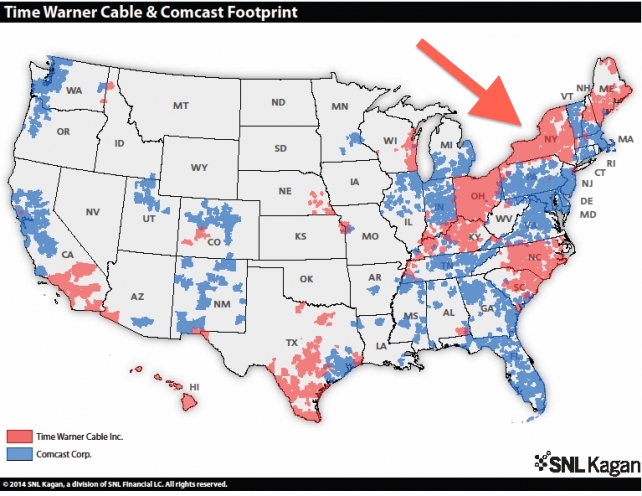
Time-Warner CEO: FCC approval merely “delayed”

Addressing TWC staff in a letter, CEO Rob Marcus seemed to ignore the public protests over the proposed merger. Marcus pointed out how overtaxed the FCC would be since the spate of proposed mergers that followed Comcast’s bid for TWC earlier this year. He went on,

“In the meantime, recent speculation about mergers and acquisitions in the content world are adding more fuel to the public debate about whether consolidation is good or bad for consumers. While it’s possible that all this noise could impact the review of our deal, we continue to work closely with Comcast on planning for a closing around year-end, understanding that it could take longer.”

All the “noise” at the FCC appears to be of little concern to the CEO and the merger staff who are moving forward as if the deal is already done. Is it telling that the authors of this deal are more concerned about “delays” than the serious questions surrounding approval?

Well, at least they are making ads to convince us!Comcast pro merger ad

Against a Comcast-TWC merger

Here is a version of my public filing with the FCC. Here is where you can file yours.

“The FCC should consider more than mere ‘competition’ in distribution providers as they weigh the public interest aspects of Comcast’s proposed acquisition of Time-Warner Cable. Comcast argues that the merger is a boon to public interest because consumers will benefit from the synergies and efficiencies of combining the companies. They also argue that the companies did not compete in the first place, so there is no strength in the argument that the merger would undermine the competitive market place. But this is a shallow view of how competition functions in media markets. Let me break down Comcast’s argument and propose my own counter to the merger.

The merger represents clear benefits for Comcast, Time-Warner and other major players in the pay tv market. They argue this despite the mounds of evidence that distributors treat customers poorly as companies scale up. Existing criticism shows how little benefit there is for the American public in having choice restricted. The recent Comcast customer service fiasco illustrates the failure of their business model to achieve even basic consumer satisfaction. Despite this evidence, the argument from Comcast and similar large commercial stakeholders is that synergy will allow Comcast to lower costs for consumer due to consequent efficiencies in merging and reorganizing coverage areas. I ask the Commission to challenge the assumption that what is good for Comcast economically is automatically good for the public. It is not.

For evidence, see the recent market power demonstrated by Comcast in the defeat of FCC/Tennis Channel. The Tennis Channel called upon the FCC’s mandate to maintain competition in the marketplace, disputing Comcast’s refusal to place the independently owned Tennis Channel on its basic tier. This is important to independents like Tennis Channel because this means more viewers and a more viable business model as advertisers evaluate channels according to the viewers they can potentially attract. Comcast’s restriction of Tennis Channel to a ‘sports package’ pushes down this potential viewership and, thus, undermines Tennis Channel’s ability to compete with Comcast-owned sports networks . . . which, of course, are found on the basic tier.

Although a Comcast showed a clear preference for Comcast-owned content properties (a result of something economists call vertical integration), the appellate court threw out the Tennis Channel’s complaint citing insufficient evidence of Comcast’s use of market power to squeeze out competitors.

It was a poor decision. Judge Estrada’s reasoning used deeply flawed analogies. First, the majority opinion compared the FCC’s public-interest request for diversity in American programming with President Adams’ Alien and Sedition Acts (yes, from 1798). Second, the court’s opinion went on to compare Tennis Channel’s request to be treated equally to the federal government requiring the New York Times to give freelance journalists space on the front page against the paper’s best editorial judgment.

Whether these frail analogies are failures of reasoning or a failure to understand significant differences in media technologies and, shockingly, U.S. media law, I do not know. The trend is, however, obvious. Commercial power is protected by the political freedoms put in place to safeguard diversity of political perspectives. The irony is that the Alien and Sedition Acts were eventually defeated (thank you, Jefferson) for the sake of free expression and diversity in media. Estrada marshals this piece of history as a rationale for the continued centralization of media power (now held by corporate America rather than the executive branch), effectively limiting media diversity in the name of free speech protections for Comcast. Where Jefferson liberated newspapers from draconian Federalist overreach by dismantling the A&S Acts, Estrada helped to entrench commercial power to silence the voice of competition.

The point, dear Commissioners, is this. Diversity IS threatened by this merger, creating higher barriers to entry for new and independent content creators and smaller distribution companies. Comcast extracts “rent” from new channels seeking distribution. This puts media entrepreneurs and upstarts proposing new content in direct competition with established content creators like megacorporations Disney and Viacom.

Consider this larger complex of media distributors and creative industries making the shows. There are clear indirect anti-competitive consequences to Comcast’s control of over a third of U.S. household. How will smaller content entrepreneurs get a foothold in a market dominated by one main distributor when said distributor has preexisting profitable relationships with other massive companies like Viacom and Disney, companies whose content will be preferred due to preexisting economic relationships? The problem of incumbency is crucial. Small creative media start-ups will be dissuaded from the get-go, wary of the crushing power of the giants controlling the game and, increasingly, shaping the rules of the game. Moreover, venture capital will also dry up in such an investment climate. When there is no money in creating new, original programming and fostering innovation, a commercial media system will not do so. More reality television spin-offs, anyone?

Comcast may respond to the public-interest argument here by saying that TWC and Comcast do not compete for subscribers in discrete markets. This is true, but it, a) obscures the actual function of competition in media markets and b) should only serve to illustrate the anti-competitive climate of the distribution industry in its current state. Merger advocates claiming that ‘we don’t have competition anyway so let the merger go through’ should be a red flag for the Commission . . . not a sound argument for the continued horizontal concentration of already vertically integrated media industry.

Comcast’s ability to sweep aside public-interest needs of American democracy must be challenged. The FCC’s ruling on this matter can be that challenge, Commissioner Wheeler. No noteworthy public interest will be damaged by refusal to allow the merger. Can the same be safely said of allowing further concentration?”

Blog note: The argument I filed with the FCC is sound but likely meaningless to the Commission. What counts is volume of public contribution. The Commission needs to feel like it is being watched by more than lobbyists. Contact the FCC with your own objection. Even a couple of sentences. Something like this would be good: “My mom said ‘Comcast acts like the FCC is a feckless hurdle for corporate interests like Comcast even though the Commission is really a mere handmaiden to corporate power.’ That’s not true! Is it?”

Blog update:

Comcast reported strong second quarter earnings. The company reported a revenue increase of 3.5 percent and cash flow growth of 7 percent. Fierce Cable notes that these stats beat the prediction of $5.7 billion. I wonder if that customer retention program can take the credit since it has taken so much flack recently . . .

In the words of one Comcast service representative: “The customer is calling in to tell you what’s wrong, and you’re looking for ways to sell them service.” Looks like punishing your workers and forcing yourself on customers (especially when “senile”!) is a viable business model.

Normative stances in scholarship

Nietzsche spoke of philosophy as a burden. It was a thankless labor of love, carried out by a reluctant few. It was a duty to criticize prevailing beliefs and assumptions that undermined human spiritual fulfillment. Philosophers, he suggested, “have found their task, their hard, unwanted, inescapable task . . . in being the bad conscience of their time.”

I wonder if the same can be said for critical scholarship. Critical policy analysis of substance has little sway in D.C. Public interest has transformed as the video marketplace has grown increasingly governed by concentrated industry. This is due, in part, to a change in the politics of evidence; increasingly, market-based analytic tools for assessing media performance have rendered public-interest principles invisible or twisted into meaninglessness. It has been a slow erosion for sure, but the business class harnessing of media market rules seems to have quickened pace, emboldened by a generation of Reagan appointees seeing out their tenure in the appellate system. Public-interest often has the burden of proof.

In fact, the DC appellate court showed something that bordered on contempt for the FCC’s argument against Comcast. Owners at The Tennis Channel claim Comcast preferred its own sports networks over independent competition. At question was whether the refusal to grant Tennis a better tier was proof that Comcast’s new vertically integrated structure had undermined competitiveness in the A/V market. Judges in the ruling skewered the FCC’s attorney for suggesting Comcast used undue “market power” but refused to consider the argument without specific economic reports making that case.

Important measures of media success are missing from such episodes. The FCC’s claim of injury for The Tennis Channel argued that Comcast’s bad business practices would lead to an unhealthy marketplace. It was an economic rationale. The court’s decision, too, reflects a reliance on market-based reasoning. The judges chose to view the legal contest as a contract dispute between two private parties. There was no role for the government to enforce the public interest. It was a matter of the marketplace.

Measures of media “success,” beyond ratings, have always been tricky. Where they became quantifiable regulations after the civil rights era (quota systems for minority ownership, etc.) only a weak correlation could be established between ownership diversity and actual expansion of viewpoint diversity in content.

How does one measure the value of less tangible democratic functions of a media system? Can investigative journalism have a metric to know policy impact? Would it even be a good idea to do so? How to value a deep, global news bureau system? Public-interest has always been dangerously elusive in US law. The “econometrics” preferred by current industry and policy officials make the cost apparent while the public-interest value remains obscure. Current means of evaluating the performance of the US news system cannot quantify public interest save for “what interests the public” via ratings.

As a result, activists and scholars’ voices are portrayed as idealistic pablum if it is even heard. Looking at the forces bearing down on media policy in the US, critical voices sometimes seem like buzzing gadflies angrily buzzing around the lumbering ox of the policy machine. Some very fine policy analysis is lost and critical scholars can appear a Jeremiah-like voice in the wilderness. How does this change? Means of activism like Free Press and Amit’s work at the IIP point the way forward.